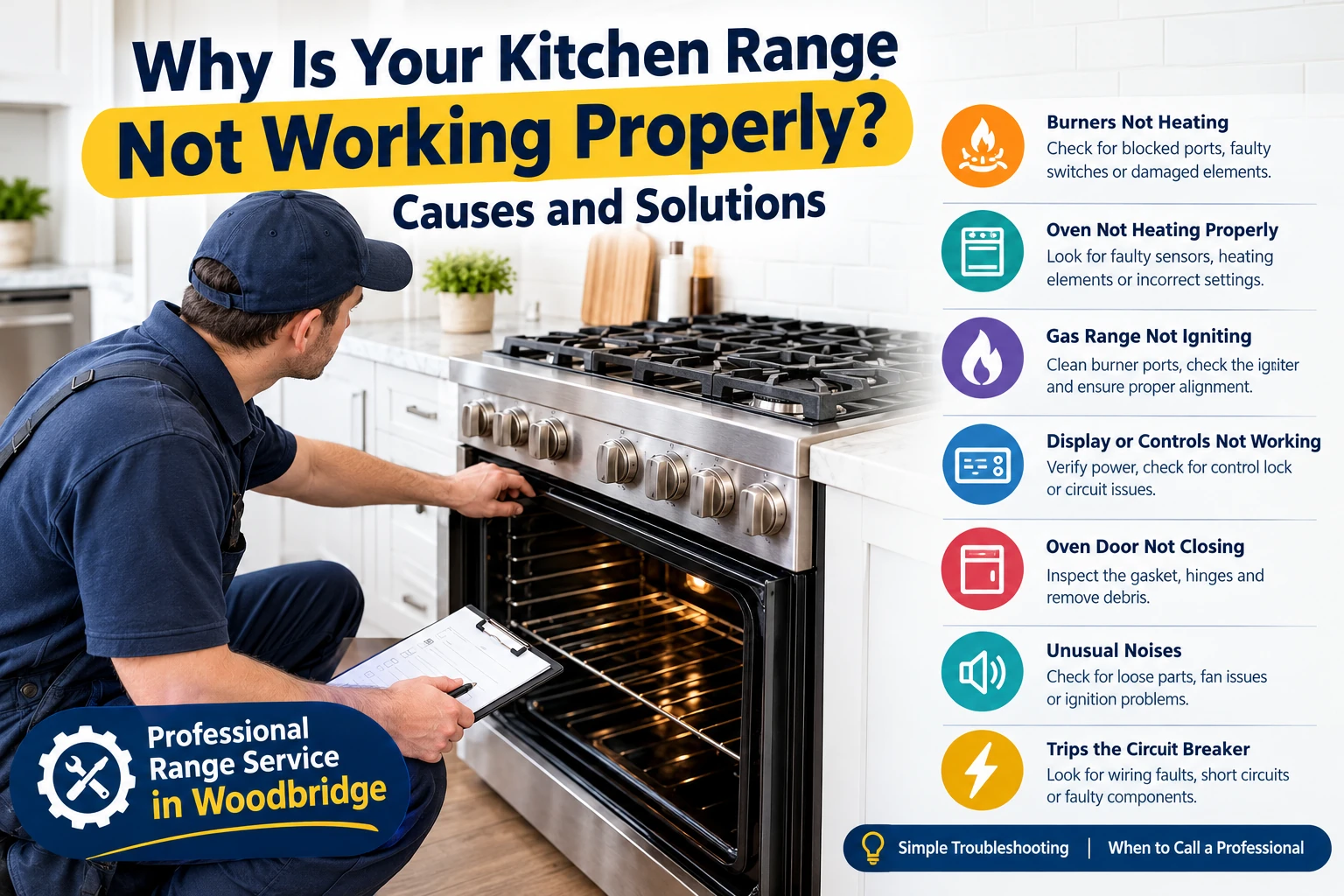
 A kitchen range is an important appliance in every household, helping homeowners prepare daily meals efficiently. However, when a range stops working properly, cooking can become frustrating and time-consuming. Problems such as burners that fail to heat, an oven that does not reach the correct temperature, or controls that stop responding can affect the appliance’s performance. Understanding the common causes of these issues can help homeowners identify simple troubleshooting steps and determine when professional assistance is necessary.
If your kitchen appliance is showing signs of trouble, knowing when to seek range service Woodbridge can help you address the problem before it becomes more serious. This guide explains common kitchen range problems, their possible causes, and practical solutions.
1. Kitchen Range Burners Are Not Heating
One of the most common range problems occurs when a burner does not heat properly. This issue can affect both gas and electric ranges and may prevent you from cooking food evenly.
Possible causes include:
- A damaged electric heating element.
- A burner that is not positioned correctly.
- Blocked gas burner openings.
- A faulty burner switch or ignition component.
Possible solutions:
For an electric range, turn off the appliance and allow the burner to cool before checking whether a removable coil is correctly positioned. For a gas range, inspect the cooled, removable burner cap and clean accessible components according to the manufacturer’s instructions.
If the burner continues to malfunction, a qualified technician can inspect the heating element, ignition system, or related components.
2. The Oven Is Not Heating Properly
An oven that fails to reach the selected temperature can affect cooking results. Food may remain undercooked, baking times may increase, and meals may cook unevenly.
Common reasons include:
- A faulty heating element.
- A malfunctioning temperature sensor.
- Incorrect oven settings.
- A damaged door gasket.
Troubleshooting tips:
- Confirm that the correct cooking mode and temperature are selected.
- Check whether the oven door closes completely.
- Inspect the visible door gasket for signs of damage.
- Use an oven thermometer to compare the actual temperature with the selected setting.
If these steps do not resolve the issue, professional diagnosis may be required to identify a faulty sensor, heating element, or control component.
3. Gas Range Is Not Igniting
A gas range that clicks repeatedly without producing a flame may have an ignition problem. Food residue, moisture, or a damaged igniter can prevent the burner from lighting correctly.
Possible causes:
- Dirty or obstructed burner ports.
- Moisture around the ignition system.
- An incorrectly positioned burner cap.
- A defective ignition component.
What you can do:
- Turn off the burner and let it cool completely.
- Clean accessible burner parts according to the manufacturer’s instructions.
- Ensure removable burner caps are positioned correctly.
- Check the appliance’s power supply if the ignition system requires electricity.
If you smell gas, do not attempt troubleshooting or operate electrical switches. Leave the area and contact your gas utility or emergency services from a safe location.
4. The Kitchen Range Display or Controls Are Not Working
Modern ranges use electronic controls to manage cooking temperatures, timers, and operating modes. When the display becomes blank or buttons stop responding, using the appliance may become difficult.
Potential causes include:
- A temporary power interruption.
- An activated control lock.
- A tripped circuit breaker.
- A faulty electronic control board.
Possible solutions:
First, consult the owner’s manual to check whether the control lock is activated. Confirm that the appliance has power and look for any displayed error codes.
If the breaker has tripped, avoid repeatedly resetting it. Persistent electrical problems or an unresponsive control panel should be inspected by a qualified professional. Never remove the control panel or handle internal wiring without proper training.
5. The Oven Door Is Not Closing Properly
An oven door that does not close securely can allow heat to escape, increase cooking times, and make temperature regulation more difficult.
Common causes include:
- A worn or damaged door gasket.
- Misaligned door hinges.
- Food debris around the door seal.
- Damaged door components.
How to troubleshoot the problem:
- Allow the oven to cool completely.
- Inspect the visible gasket for cracks or deterioration.
- Clean debris around the door seal using manufacturer-approved methods.
- Check whether the door appears misaligned.
If the door still fails to close securely, professional service may be necessary to inspect the hinges, gasket, or other components.
6. The Range Makes Unusual Noises
Some sounds are normal during operation, but sudden or persistent noises may indicate a problem. Clicking, rattling, buzzing, or unusually loud fan sounds deserve attention.
Possible reasons include:
- Loose or incorrectly positioned components.
- Normal expansion and contraction of metal.
- A malfunctioning cooling fan.
- An ignition system problem.
Recommended actions:
Observe when the noise occurs and consult the owner’s manual to determine whether it is a normal operating sound. Check that removable components are correctly positioned after the appliance has cooled.
If the noise continues, becomes unusually loud, or occurs alongside burning smells or electrical problems, stop using the range when safe and arrange a professional inspection.
7. The Range Keeps Tripping the Circuit Breaker
An electric range that repeatedly trips its circuit breaker may have an electrical fault that requires immediate attention.
Potential causes include:
- Damaged internal wiring.
- A faulty heating element.
- A short circuit.
- An electrical supply problem.
What you should do:
- Stop using the appliance.
- Do not repeatedly reset the circuit breaker.
- Avoid inspecting exposed wires or internal electrical components.
- Contact a qualified appliance technician or electrician for diagnosis.
Prompt attention can help identify the underlying problem and reduce the risk of further damage.
When Should You Seek Professional Range Service?
Basic troubleshooting can resolve some minor issues, but internal component failures require appropriate tools and technical knowledge. Homeowners should consider professional assistance when burners repeatedly fail, oven temperatures remain inconsistent, electronic controls stop working, or electrical problems occur.
When looking for range service Woodbridge, choose a qualified service provider who can diagnose the problem, explain the recommended repair, and provide a cost estimate before beginning work.
Conclusion
A kitchen range may stop working properly for several reasons, including faulty burners, heating problems, ignition failures, damaged door seals, and electrical issues. Identifying the symptoms can help homeowners determine the appropriate next step.
Simple maintenance and manufacturer-recommended troubleshooting may resolve minor problems. However, gas leaks, electrical faults, and suspected internal component failures require professional attention. Timely diagnosis and proper maintenance can improve appliance performance, prevent additional damage, and help extend the useful life of your kitchen range.
